©Ph. Delval
Have you decided to take the children to visit the D-Day landing beaches in Normandy?
You’re right ! It is by being there that they will understand that the fate of France, Europe and the world was decided on these beaches in 1944.
Here we go fo our 5 good reasons to visit the Juno Beach Centre.
It is through exploring the museums, the remains of the Atlantic Wall, or walking through the military cemeteries… that history lessons will truly come to life.
We invite you to stop in Courseulles-sur-Mer with these 5 great reasons to visit the Juno Beach Centre.
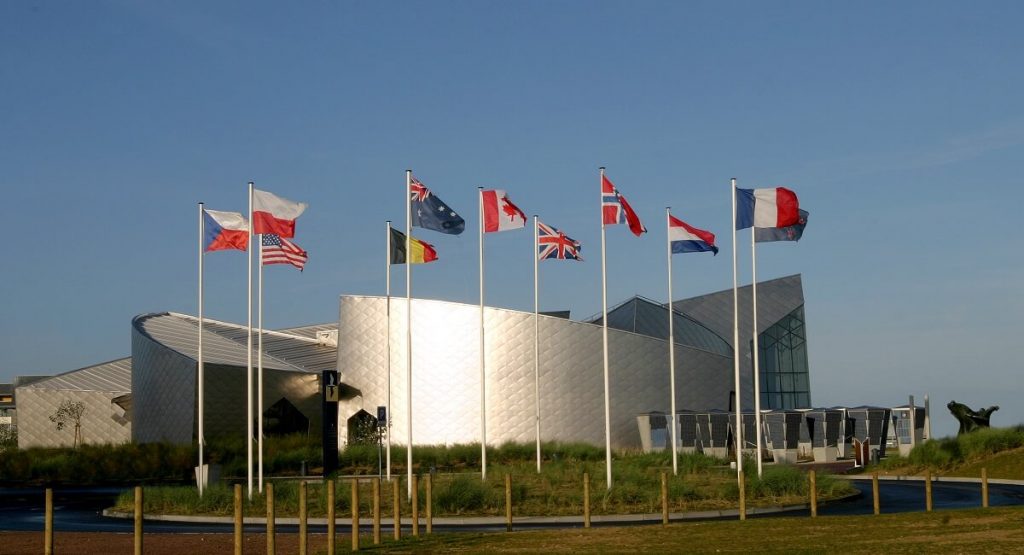
This is the only Canadian museum on the D-Day beaches.
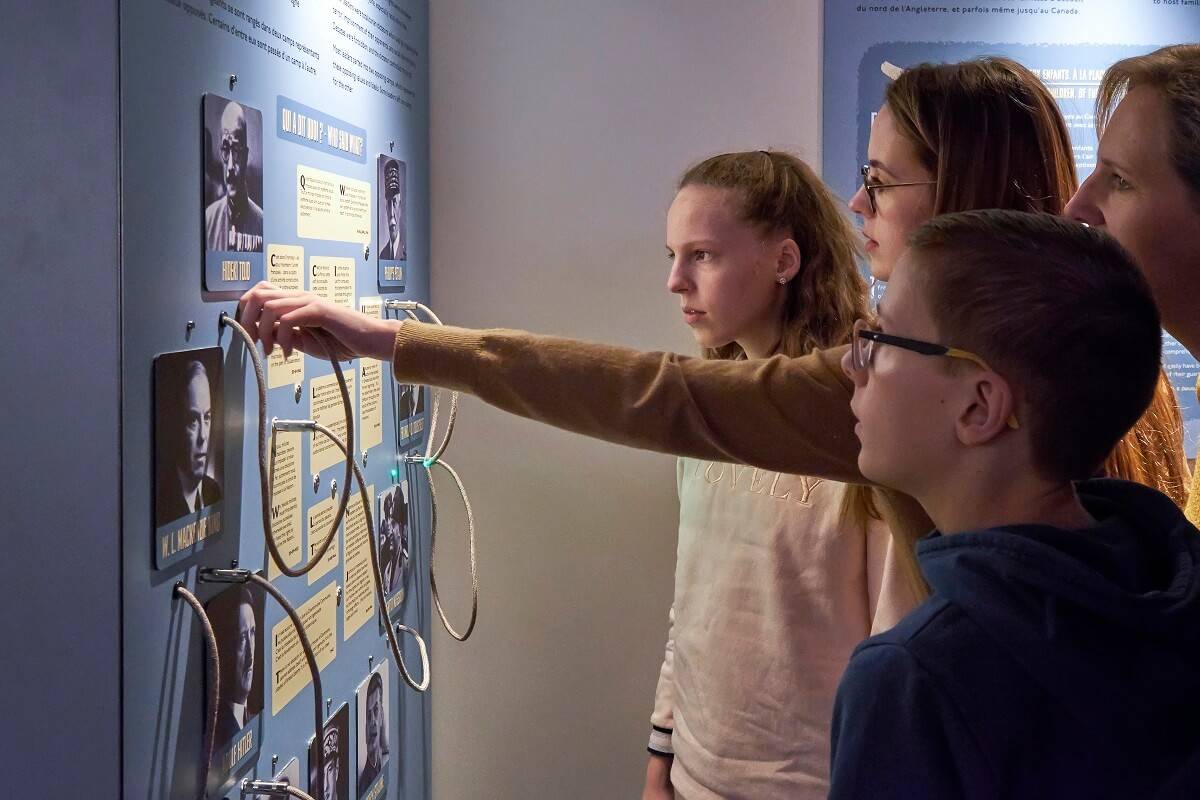
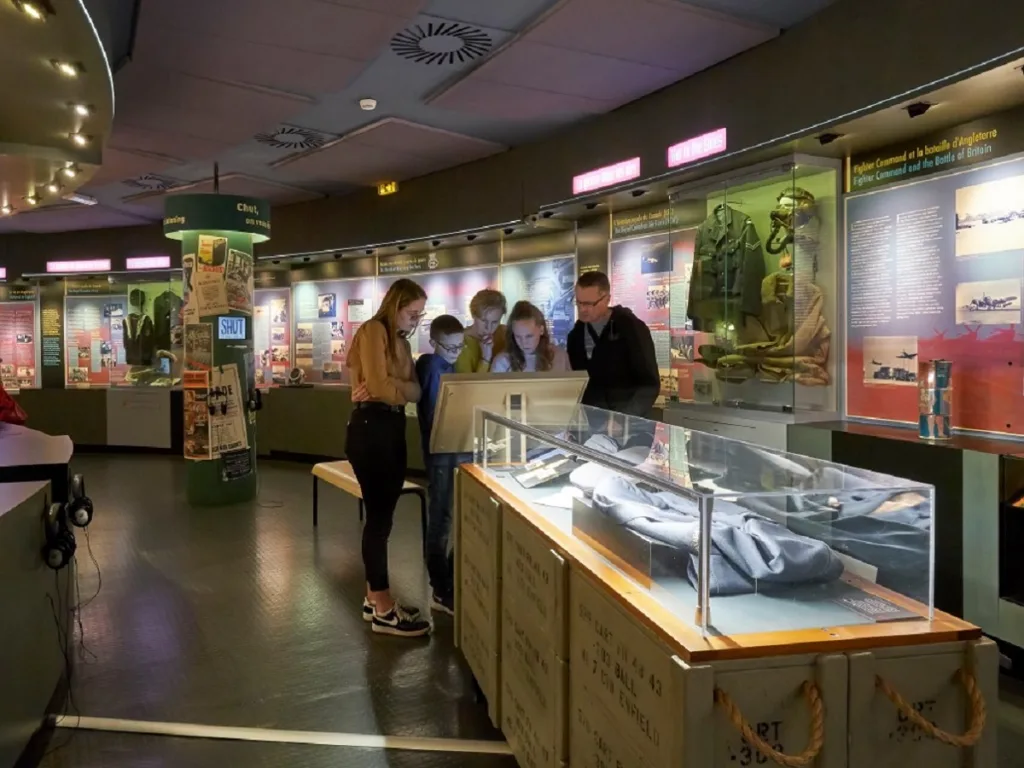
It is firmly geared toward families. Conceived and designed by Canadian veterans, this museum features an interactive and dynamic exhibition tailored for children ages 7 and up, notably with its “Explore Juno” tour.
©Ph. Delval
5 themed galleries, 2 moving films, numerous artifacts that belonged to Canadian soldiers and civilians, poignant personal accounts, and various multimedia tools.
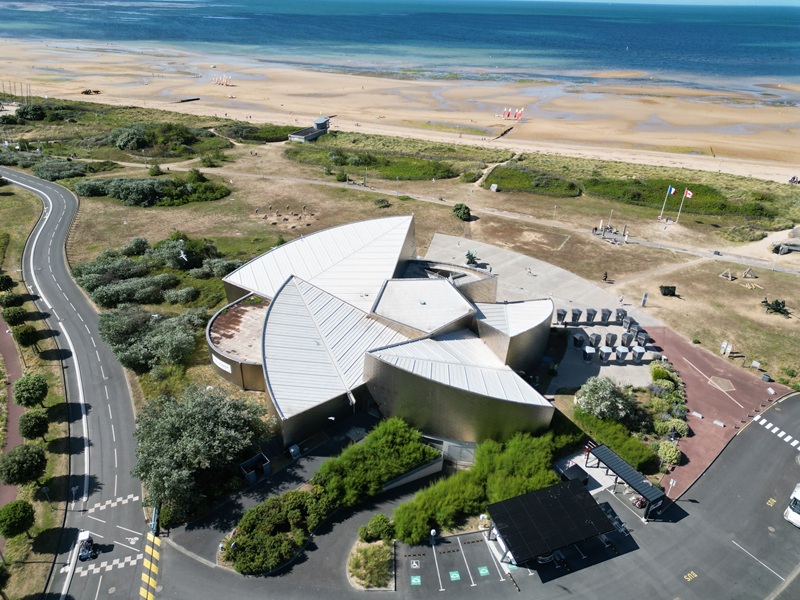
All of this is located in Juno Park, a true open-air museum featuring remnants of the Atlantic Wall.
The museum showcases Canada’s incredible contribution during World War II, which is certainly less well-known than that of the United States.
It also offers a deeper understanding of Canadian values and culture. All of this is presented on two levels, for both children and adults.
Here are the 5 good reasons to visit the juno beach with your family.
But first of all… a little history is in order

©Coraline et Léo – Juno Park
More than 6,000 warships and landing craft transported over 130,000 soldiers across the English Channel, supported by thousands of aircraft. 14,000 of them were Canadians, making Canada the third-largest contributor of troops after the United States and Great Britain.
They landed on the beach sector codenamed Juno, liberating the towns from Graye-sur-Mer to Saint-Aubin-sur-Mer.
All of Canada participated in the war effort by providing the troops with the necessary equipment and supplies.
More than 1 million Canadians enlisted, making a decisive contribution to the Allied forces.
It is worth noting that the young soldiers who came to fight in Europe were volunteers.
The Juno Beach Centre is certainly one of the best-designed centers for children.
1# A museum geared towards the younger generation
A museum adapted for young people, that was the wish of the veterans who founded the Juno Beach Centre.
©G. Wait – Juno Beach Centre
Thanks to its interactive modules and touch screens, the “Explore Juno with your family” tour makes discovering the museum with your family more accessible: manipulations, quizzes, games…
Each module invites children and teenagers to think about historical concepts within their reach. The interactive games allow them to accumulate “poppy points” while understanding the issues of immigration, war and dictatorships.
At the end of the course, around the giant tablet, we keep track of our points while discovering the Canada of today, its culture, its geography and its people.
With Explore Juno, I discovered what it was like to be my age during the war. It made me think.
Thomas, 11 years old
2# A complete scenography to understand the D-Day
As there was no commemorative place to remember Canada’s important contribution, the Juno Beach Centre project was born in the 1990s on the initiative of a group of veterans.
This place of remembrance pays tribute to our “cousins” from across the Atlantic. To the 45,000 Canadians who lost their lives during the war, including 5,500 during the Battle of Normandy and 359 on D-Day.
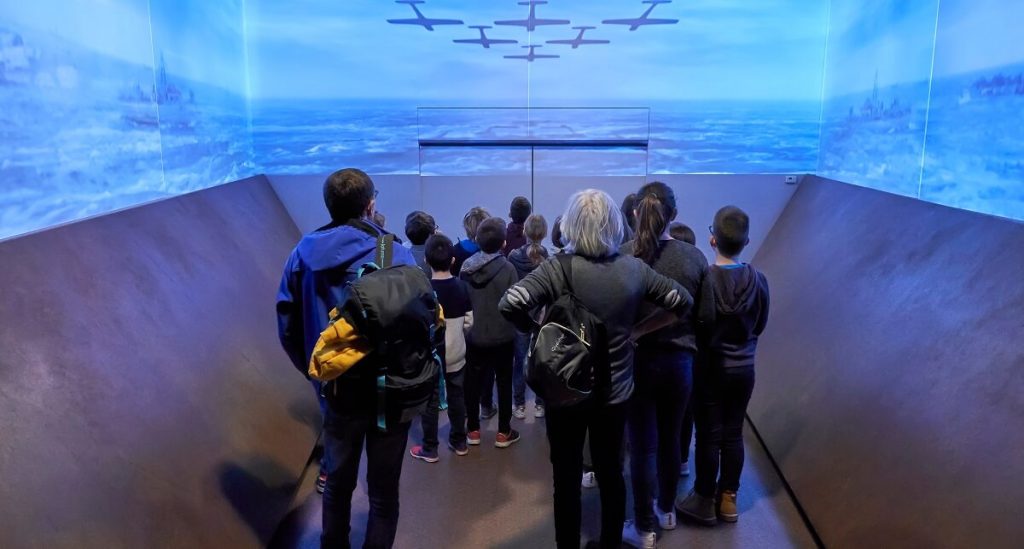
As soon as the visit begins, we are plunged into history by taking our place in a room that evokes the shape of a landing craft. It gets dark. An immersive film projected all around us puts us in the mind of the Canadians during the Second World War.
Emotion guaranteed.
Throughout the visit, we understand the civil and military war effort in Canada and on the various fronts during the Second World War.
In the five rooms, we discover life stories, audiovisual and audio testimonies, objects from the soldiers’ daily lives: weapons, medicine, military uniforms and unusual objects.
Each room has different levels of reading adapted to parents and children, with in particular the “Explore Juno” tour for the youngest in the form of an app, games to play with and quizzes…
©Ph. Delval
Before discovering the film “In Their Footsteps“, take the time to look up at the ceiling. The names of more than 45,000 Canadian war dead are scrolled across the ceiling, etched in our memory. Thank you; thank you for giving us back our freedom.
The highlight of the visit is the immersive film “In Their Footsteps”, which is pure intensity. It illustrates the sacrifice of Canadian soldiers on D-Day and in the Battle of Normandy. Made from archival film and re-enactment scenes.
It is accompanied by the voices of Canadian war correspondents Marcel Ouimet and Matthew Halton.
As we leave the room, the children ask questions. That’s good. To question, to understand, to make an impression, to cultivate a curiosity for another culture… these are the main objectives of the creators of the museum.
3# A museum in the heart of the remains of the Atlantic Wall
©Coraline et Léo – bunker, park Juno
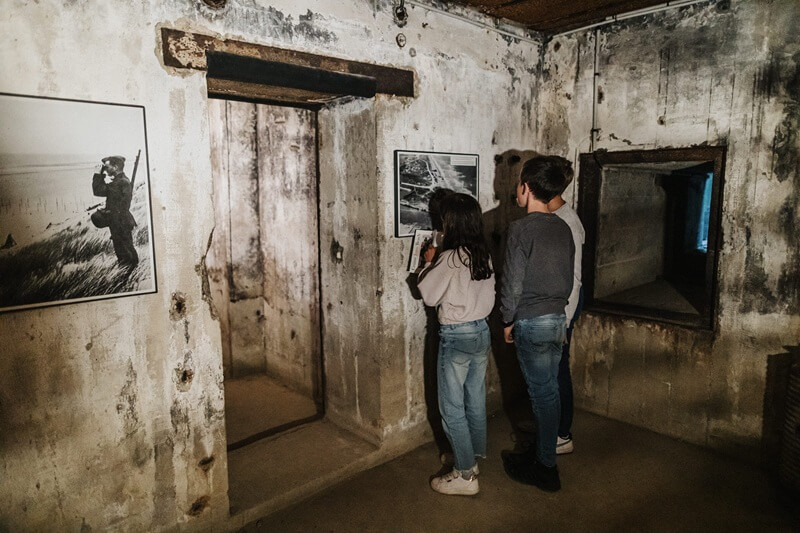
The Juno Beach Centre is located in the heart of the Juno Park in Courseulles-sur-Mer. There are several remains of the defensive strongpoint built during the German occupation, known as the Atlantic Wall. There is also a model of a Canadian gun and German tetrahedrons.
The museum’s Canadian guides give 45-minute guided tours of this historic site, suitable for children aged 6 and up. The underground galleries, the German command post and the observation bunker are only accessible during these tours.
They end on the beach to explain how the 14,000 Canadian soldiers who landed on Juno Beach on 6 June 1944 overcame this defensive system.
Juno Park is a pleasant place to walk around, open all year round and free of charge. A signposted trail provides information on three themes: the landings, the seaside resort, and the flora and fauna of the coast.
Continuing the walk westwards, past the sailing school, you can see the Lorraine Cross, symbol of General de Gaulle’s return to France after his exile in England. A little further on, a “One Charlie” tank that landed on 6 June 1944 at Graye-sur-Mer is displayed.
Juno Beach is probably the area with the most remains of the Second World War visible or buried under the dune. If you would like to show your children other traces of the Atlantic Wall, we invite you to take a walk along the dyke at Bernières-sur-Mer to see the bunkers and the Canada House (Maison des Canadiens).
Then take a tour of the radar station at Douvres-la-Délivrande, an authentic German radar station on the D-Day landing beaches. The bunkers have been converted into museum spaces.
4# A new geocaching style game : Juno Caching
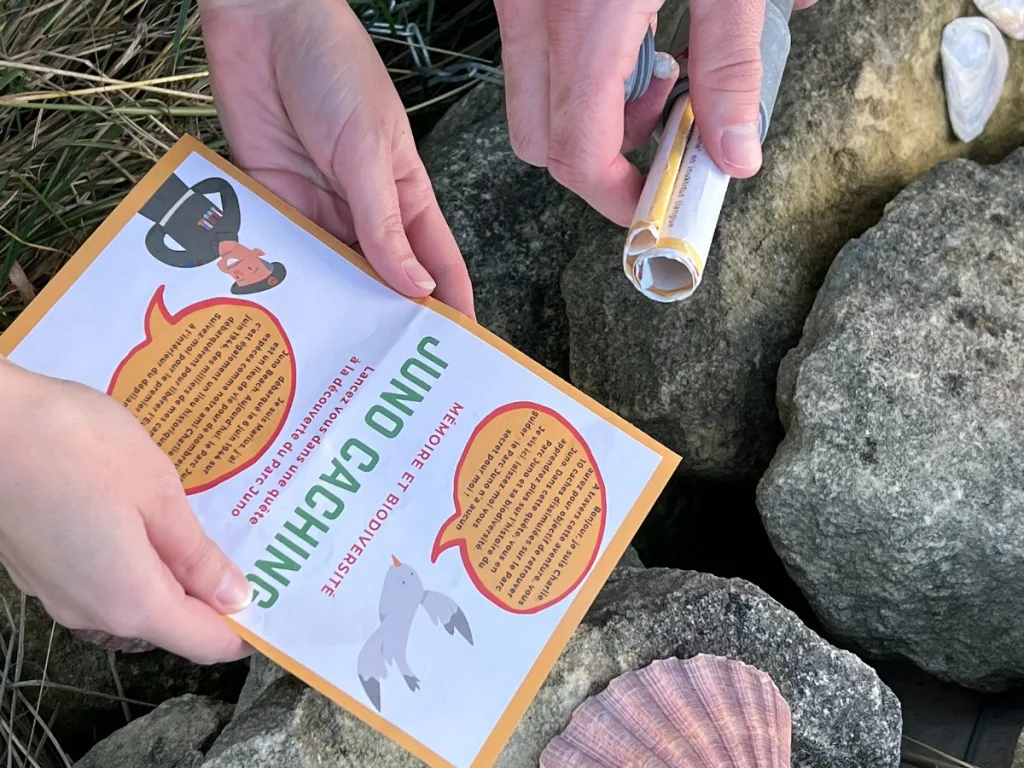
Juno Caching is a ten-step adventure to discover memory and biodiversity in Juno Park. Free and accessible
It’s perfect for families !
Here’s another of the 5 good reasons to visit Juno Beach.
With the help of the seagull Charlie and the veteran Marius, you can move around the bunkers, around the tetrahedrons or along the beach in search of clues hidden in the caches.
After visiting the museum, you can learn more! But not only about the D-Day landings, you also discover the biodiversity that surrounds us.
Why talk about biodiversity ? Because the museum team is very sensitive to environmental issues.
The Juno Beach Centre is the first museum in Normandy committed to a global strategy of decarbonisation, sustainable development and circular economy.
5# A temporary exhibition for children
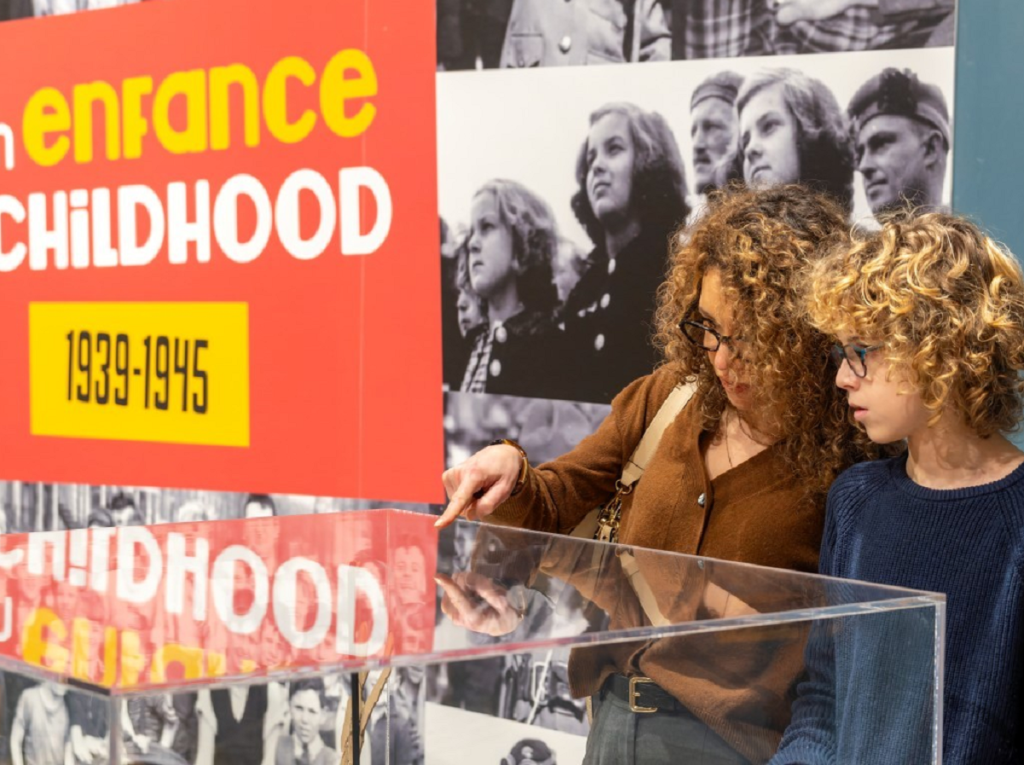
“My Childhood, 1939-1945“, until December 2027
©Ph. Delval
Dive into the daily lives of Norman and Canadian children during the Second World War.
This exhibition invites visitors to experience the war through the eyes of children on both sides of the Atlantic. Through personal testimonies, artifacts, and photographs, the Juno Beach Centre explores how young lives were shaped by occupation, combat, liberation, and reconstruction. The children’s perspective reveals the human dimension of historic events that forever changed France and Canada.
Through these intimate stories, visitors will understand how children adapted and survived – often with great resilience – during some of humanity’s darkest hours. The stories will be presented through several key themes :
- The Weight of Occupation (1940–1944) at school and at home
- D-Day (June 6, 1944)
- The Battle of Normandy (June–September 1944)
- Liberation and the scars of war (1944 to today)
- The “absences” experienced by French and Canadian children
The French-Canadian boutique
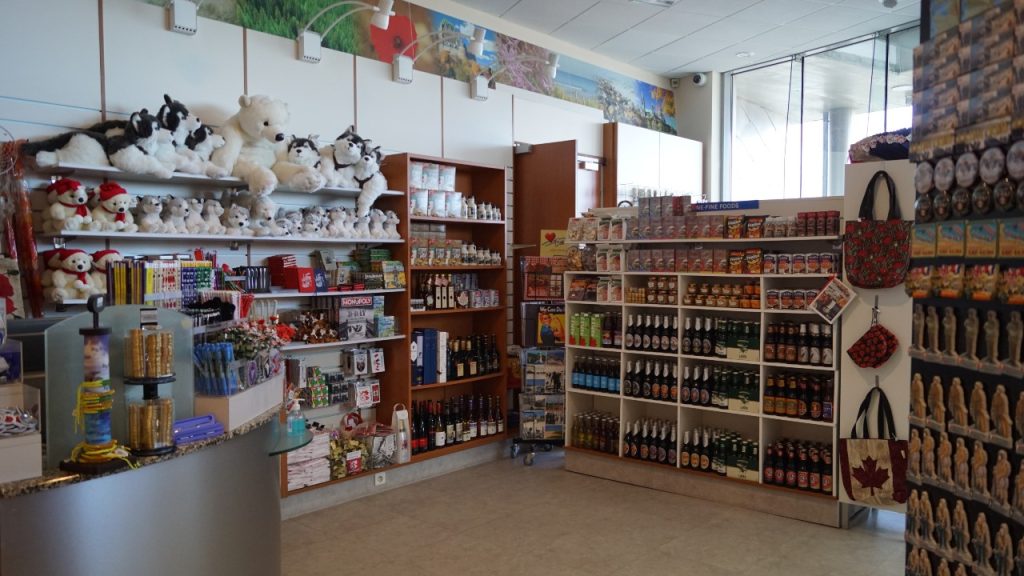
Before you leave, don’t miss a visit to the Franco-Canadian museum boutique and its exclusive Canadian products.
Of course, you’ll also find our famous maple products, as well as a selection of our famous Normandy products.
You’ll also find a poppy collection and numerous references on the D-Day landings.